



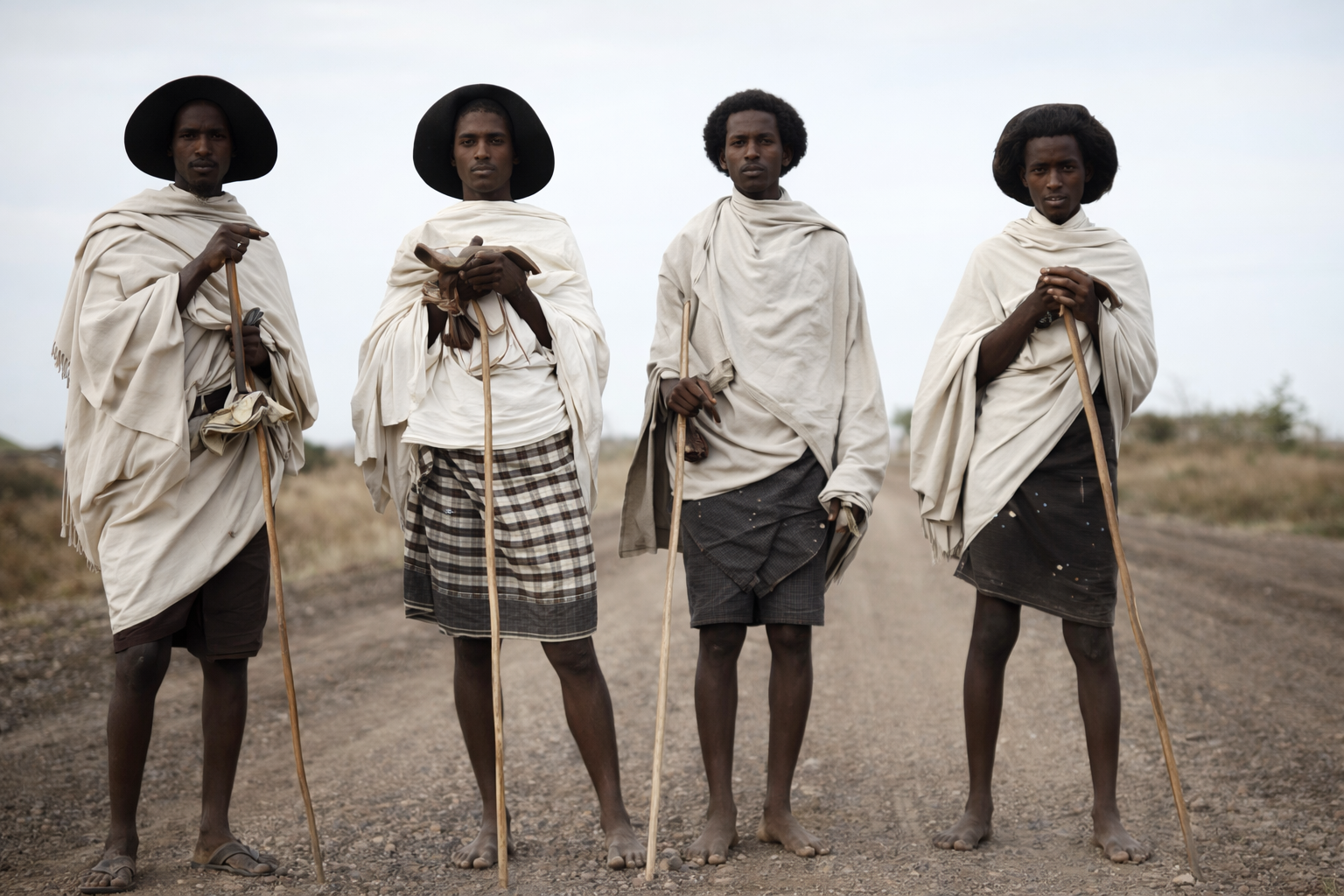

Across the Horn of Africa, Somali society is often described as linguistically and religiously unified, yet internally diverse. Within this diversity are several minority communities whose histories are preserved largely through oral tradition rather than written documentation. Among these groups, the Yibir occupy a particularly complex position. For generations, they have been both culturally integrated and socially marginalized within Somali society.
One of the most persistent narratives about the Yibir is the claim that they possess a historical connection to ancient Israelites or Jewish communities. This idea circulates in oral traditions, colonial-era writings, and modern discussions on identity. However, distinguishing between historical evidence, folklore, and social myth is essential for an academic understanding of the Yibir and their place in Somaliland.
This article examines the historical role of the Yibir, the origins of the Israel-connection narrative, and how anthropology and history interpret these claims.
HISTORICAL BACKGROUND OF THE YIBIR
The Yibir are a small minority group found primarily in Somaliland, the Somali Region of Ethiopia, Djibouti, and parts of Somalia. They are Somali-speaking, Muslim, and culturally embedded within the broader Somali social world. Unlike major pastoral clans, the Yibir historically occupied specialized social roles rather than large-scale pastoral or political leadership.
Traditional roles attributed to the Yibir include:
Ritual specialists who offered blessings at births and weddings
Providers of protective prayers and amulets
Artisans and leatherworkers
Custodians of certain oral traditions
These roles placed them in a unique position: socially necessary but often marginalized. In the traditional Somali clan hierarchy, occupational groups such as the Yibir, Midgan, and Tumaal were often categorized as sab (craft or ritual communities) and placed outside dominant clan genealogies.
SOCIAL POSITION AND MARGINALIZATION
For centuries, Somali society has been organized around lineage and clan identity. Groups without widely recognized genealogical ties to major clans were sometimes labeled as socially distinct. The Yibir’s marginalization developed within this framework, resulting in limited intermarriage and social distance from dominant clans.
Anthropologists have noted that such stratification is not unique to Somali society. Across Africa and the Middle East, occupational groups often became socially separate, leading to myths about foreign or mysterious origins. In many cases, these myths served to explain social differences rather than reflect actual historical migration.
ORAL TRADITIONS ABOUT FOREIGN ORIGINS
One of the most widespread stories about the Yibir suggests that they descend from a non-Somali religious figure who lived before the spread of Islam in the region. In some versions of the story, this figure is described as Jewish or connected to ancient Israelites. Over time, this narrative evolved into broader claims that the Yibir themselves originated from Israel or Jewish communities.
Oral traditions in Somali culture carry great significance, yet they are not always historically verifiable. They often function as symbolic explanations of identity and social hierarchy. In the case of the Yibir, the narrative of foreign origin may have emerged as a way for dominant groups to explain why the Yibir were socially distinct.
COLONIAL-ERA INTERPRETATIONS
During the late nineteenth and early twentieth centuries, European colonial administrators and travelers attempted to categorize Somali society using racial and biblical frameworks familiar to them. Some colonial writers speculated that marginalized groups like the Yibir were remnants of ancient Jewish or Middle Eastern populations.
These interpretations were often speculative and based on limited evidence. Colonial anthropology frequently relied on assumptions rather than systematic research, and many such theories have since been rejected by modern scholarship. Nevertheless, these early writings contributed to the persistence of the Israel-connection narrative.
RELIGION AND CULTURAL PRACTICE
Today, the Yibir are overwhelmingly Muslim, following the same religious traditions as other Somali communities. There is no documented evidence that they practiced Judaism as a distinct community in historical times. Their rituals, while sometimes distinct, align with broader Somali Islamic practices, including elements of Sufi tradition and local spiritual customs.
Some practices associated with the Yibir—such as blessing rituals or protective charms—have been misinterpreted by outsiders as remnants of pre-Islamic or non-Islamic religions. However, similar practices exist across many Muslim societies and do not indicate Jewish ancestry.
GENETIC AND ANTHROPOLOGICAL PERSPECTIVES
Modern anthropological research does not support a direct genealogical link between the Yibir and ancient Israelites. Genetic studies of Somali populations generally show strong continuity within the Horn of Africa, with historical interactions involving Arabian and neighboring regions but no specific evidence tying the Yibir uniquely to Jewish ancestry.
Scholars emphasize that identity narratives often arise from social dynamics rather than biological descent. The idea of foreign origin can serve as a social explanation for marginalization, even when no historical migration occurred.
WHY THE ISRAEL CONNECTION MYTH PERSISTS
Several factors contribute to the persistence of this narrative:
Oral storytelling traditions
Social marginalization, which encourages origin myths
Colonial-era speculation
Modern interest in lost tribes and ancient migrations
In many societies, marginalized groups are described as outsiders or descendants of foreign peoples. This pattern appears globally and reflects social structures rather than historical evidence.
THE YIBIR IN CONTEMPORARY SOMALILAND
In modern Somaliland, social attitudes toward minority groups are gradually changing. Education, urbanization, and economic mobility have allowed many Yibir individuals to become professionals, business owners, and community leaders. Despite this progress, social stigma has not disappeared entirely.
Discussions about the Yibir today often focus on:
Equality and social inclusion
Recognition of minority rights
Preservation of oral history
Re-examination of traditional hierarchies
Understanding the Yibir’s real history—separate from myth—plays an important role in addressing discrimination and promoting social cohesion.
CONCLUSION
The Yibir people are an integral part of Somali society with deep historical roots in Somaliland and the wider Horn of Africa. Claims of a direct connection to Israel or ancient Jewish populations are best understood as social myths shaped by oral tradition, colonial speculation, and historical marginalization rather than documented historical fact.
An academic examination reveals that the Yibir are not outsiders but indigenous participants in the cultural and social history of the region. Their story highlights broader themes of identity, hierarchy, and the ways communities construct narratives to explain difference.
By separating myth from evidence, scholars and communities alike can better appreciate the Yibir’s cultural heritage and work toward a more inclusive understanding of Somali society.
Hornexplore#2026





Comment (0)
Leave A Comment: