



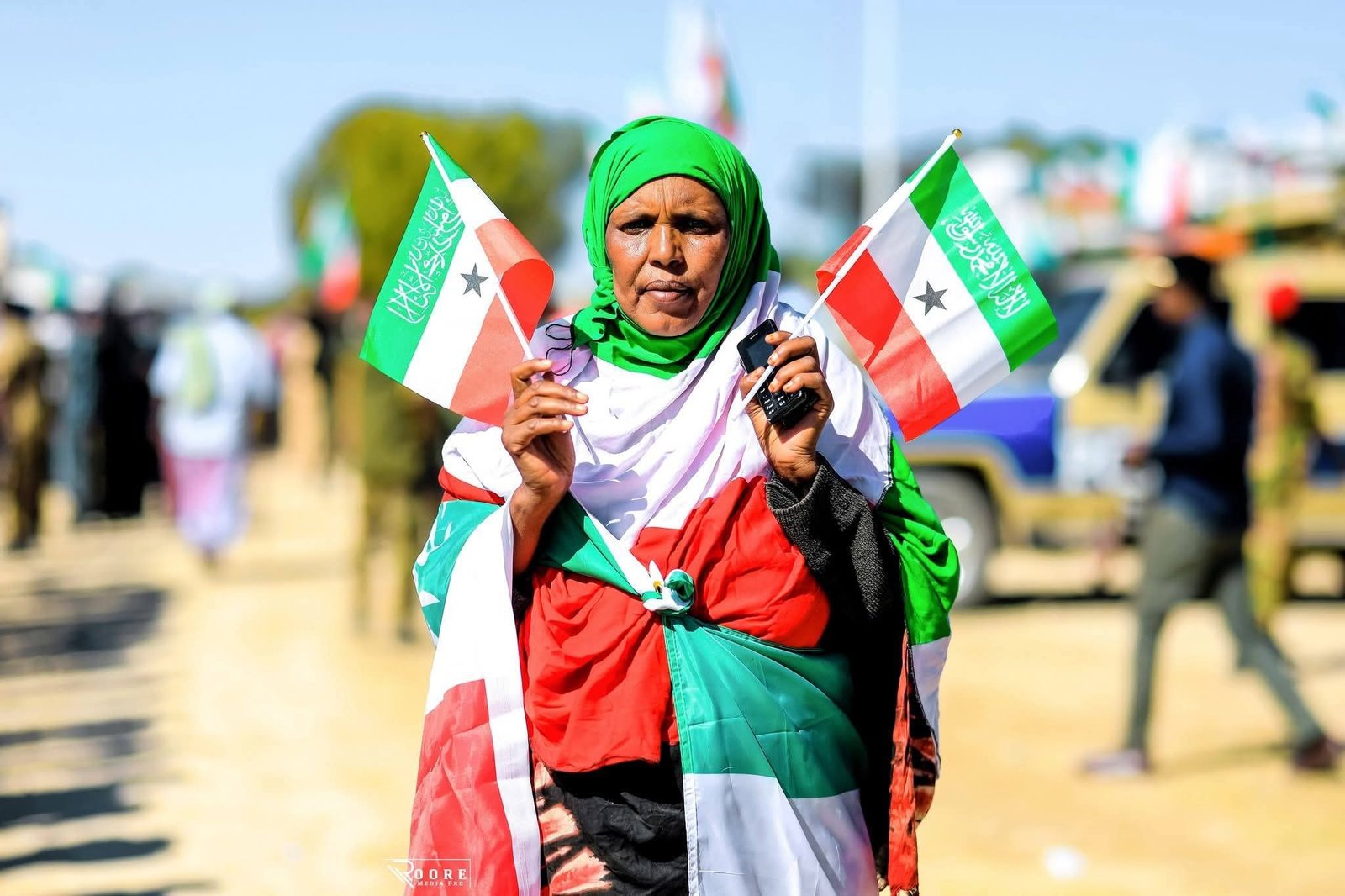

Somaliland Democracy and the Principle of “One Person, One Vote”: A Detailed Look at Somaliland’s Election History
In a region frequently associated with political instability and fragile institutions, Somaliland stands out as an unusual example of grassroots democracy and political resilience. Since restoring its independence in 1991, Somaliland has built a hybrid political system that combines modern democratic institutions with traditional mechanisms of conflict resolution.
At the center of this evolving system lies the democratic principle of “one person, one vote.” This idea—that every citizen has an equal say in choosing their leaders—has gradually shaped Somaliland’s political development and electoral history.
Today, Somaliland’s journey toward democratic governance offers an important case study in how locally driven institutions can emerge even without formal international recognition.
The Birth of Somaliland’s Political System (1991–1997)
Following the collapse of the government of the Siad Barre in 1991, Somalia descended into civil war and state collapse. In contrast, leaders in the north convened a series of reconciliation conferences aimed at restoring peace and rebuilding governance.
The most important of these meetings was the Borama Conference. At this gathering, clan elders and political leaders agreed to establish a transitional political system for Somaliland.
During this early period, governance relied heavily on traditional leadership. Elders formed the Guurti, or council of elders, which became the upper house of parliament. Rather than popular elections, leaders were chosen through consensus among clans and community representatives.
This approach prioritized stability and reconciliation over immediate electoral competition. While it was not yet a “one person, one vote” system, it laid the foundations for future democratic institutions.
The Constitutional Referendum (2001)
A major turning point came in 2001 when Somaliland held a national referendum on its constitution.
The referendum allowed citizens to vote directly on whether to approve the constitution and affirm Somaliland’s sovereignty. Over one million voters participated, and an overwhelming majority approved the document.
The referendum had two key consequences:
1. It established the legal framework for democratic governance.
2. It confirmed the commitment to multi-party elections based on universal suffrage.
This was Somaliland’s first nationwide exercise of mass voting and a major step toward the “one person, one vote” principle.
The First Local Council Elections (2002)
The first competitive democratic elections in Somaliland took place in 2002 with municipal council elections across the country.
These elections were historically significant because they also determined which political associations would become official national parties. Under Somaliland’s constitution, only three political parties are allowed to compete in national elections, in order to prevent excessive fragmentation along clan lines.
Six political associations competed, but only the top three were allowed to continue as national parties:
- UDUB
- Kulmiye
- UCID
These parties would dominate Somaliland’s political landscape for years.
The 2002 elections were widely considered peaceful and competitive, setting a positive precedent for future democratic contests.
The Presidential Election of 2003
In 2003 Somaliland held its first direct presidential election. The race was extremely close and demonstrated both the promise and the challenges of democratic competition.
The main candidates included:
- Dahir Riyale Kahin representing UDUB
- Ahmed Mohamed Mohamoud Silanyo representing Kulmiye
The final result was decided by a margin of only about 80 votes, making it one of the closest elections in Africa’s modern political history.
Although the opposition challenged the results, the dispute was ultimately resolved through the courts rather than violence. This peaceful acceptance of the outcome strengthened Somaliland’s democratic credibility.
Parliamentary Elections (2005)
In 2005 Somaliland held its first parliamentary elections for the House of Representatives.
These elections were important because they completed the institutional structure of the state:
- Executive branch (President)
- Legislative branch (Parliament)
- Upper chamber (Guurti)
Voters elected 82 members of parliament, representing different regions and political parties.
International observers and regional analysts praised the elections for their relative transparency and peaceful conduct.
Political Delays and Institutional Challenges (2008–2010)
Despite early success, Somaliland’s democratic process faced difficulties in the late 2000s. Electoral delays occurred due to political disagreements, technical challenges, and disputes over voter registration.
Tensions rose between the government and opposition parties, raising concerns about the future of Somaliland’s democratic reputation.
However, negotiations between political leaders eventually led to new elections.
The Presidential Election of 2010
In 2010 Somaliland held another presidential election that resulted in the country’s first peaceful transfer of power between political parties.
The election was won by opposition candidate Ahmed Mohamed Mohamoud Silanyo of the Kulmiye party, defeating the incumbent president Dahir Riyale Kahin.
This peaceful transition marked a milestone in Somaliland’s democratic development. In many parts of the world, incumbents resist defeat, but Somaliland demonstrated that electoral outcomes could be respected.
Technological Improvements and Voter Registration
To improve election credibility, Somaliland introduced biometric voter registration systems in the 2010s.
These systems helped:
- Reduce duplicate registrations
- Improve voter identification
- Strengthen election transparency
The modernization of electoral systems showed Somaliland’s commitment to strengthening the “one person, one vote” principle.
---
The Presidential Election of 2017
Another major democratic milestone occurred in 2017 when Somaliland held its third direct presidential election.
The election was won by Muse Bihi Abdi of the Kulmiye party, defeating opposition candidate Abdirahman Mohamed Abdullahi (commonly known as Irro) of the Waddani party.
Observers from international organizations praised the election for its organization and peaceful conduct.
This vote also demonstrated Somaliland’s increasing experience in managing complex electoral processes.
Parliamentary and Local Elections (2021)
In 2021 Somaliland held combined parliamentary and municipal elections after significant delays.
The elections were notable because they produced a strong showing for opposition parties. For the first time in many years, opposition groups gained significant influence in parliament.
Many analysts viewed this as further evidence of Somaliland’s competitive political environment.
The Ongoing Push for “One Person, One Vote”
Although Somaliland has held several elections, the full implementation of “one person, one vote” at all political levels remains an ongoing process.
Historically, the Guurti (House of Elders) has not been elected directly by the public. Reforming or modernizing this institution remains a topic of debate within Somaliland politics.
Supporters of reform argue that fully democratic elections would strengthen legitimacy and representation. Others believe the Guurti continues to play an important stabilizing role in conflict resolution.
Balancing tradition with modern democracy remains one of Somaliland’s most distinctive political challenges.
Democracy Without Recognition
One of the most remarkable aspects of Somaliland’s democratic development is that it has taken place without formal international recognition as a sovereign state.
Despite this limitation, Somaliland has managed to organize elections, build state institutions, and maintain relative political stability compared with many neighboring regions.
For many citizens, democracy has become an important part of Somaliland’s identity and political narrative.
---
Conclusion
The history of elections in Somaliland reflects a gradual but determined movement toward the principle of “one person, one vote.” Beginning with clan-based reconciliation conferences in the 1990s, the region has progressively expanded democratic participation through referendums, municipal elections, parliamentary contests, and presidential races.
While challenges remain—such as election delays, institutional reform, and political competition—Somaliland’s democratic experience continues to attract attention from scholars, policymakers, and observers around the world.
In a region often defined by instability, Somaliland’s electoral history shows how locally driven democratic institutions can emerge through negotiation, compromise, and civic participation.
Ultimately, the success of Somaliland’s democracy will depend not only on elections themselves, but on the continued commitment of its citizens and leaders to the principle that every voice matters and every vote counts.




Comment (0)
Leave A Comment: