


To More Inquiry
Djibouti is a small country built on enormous geological drama — a lake of salt sitting below sea level, coral islands where the world's largest fish gather each winter, and a highland forest rising straight out of the desert. Raw, sparsely populated, and refreshingly untouched by mass tourism, it rewards travellers looking for genuine adventure at one of the most strategically vital crossroads on Earth.
A Small Country of Enormous Extremes
Wedged between Eritrea, Ethiopia, and Somalia, at the point where the Red Sea narrows into the Gulf of Aden, Djibouti is one of the smallest countries in Africa — and one of the most geologically extraordinary. This is a nation still being pulled apart at the seams: it sits directly on the East African Rift, where three tectonic plates meet, quite literally reshaping the land beneath travellers' feet.
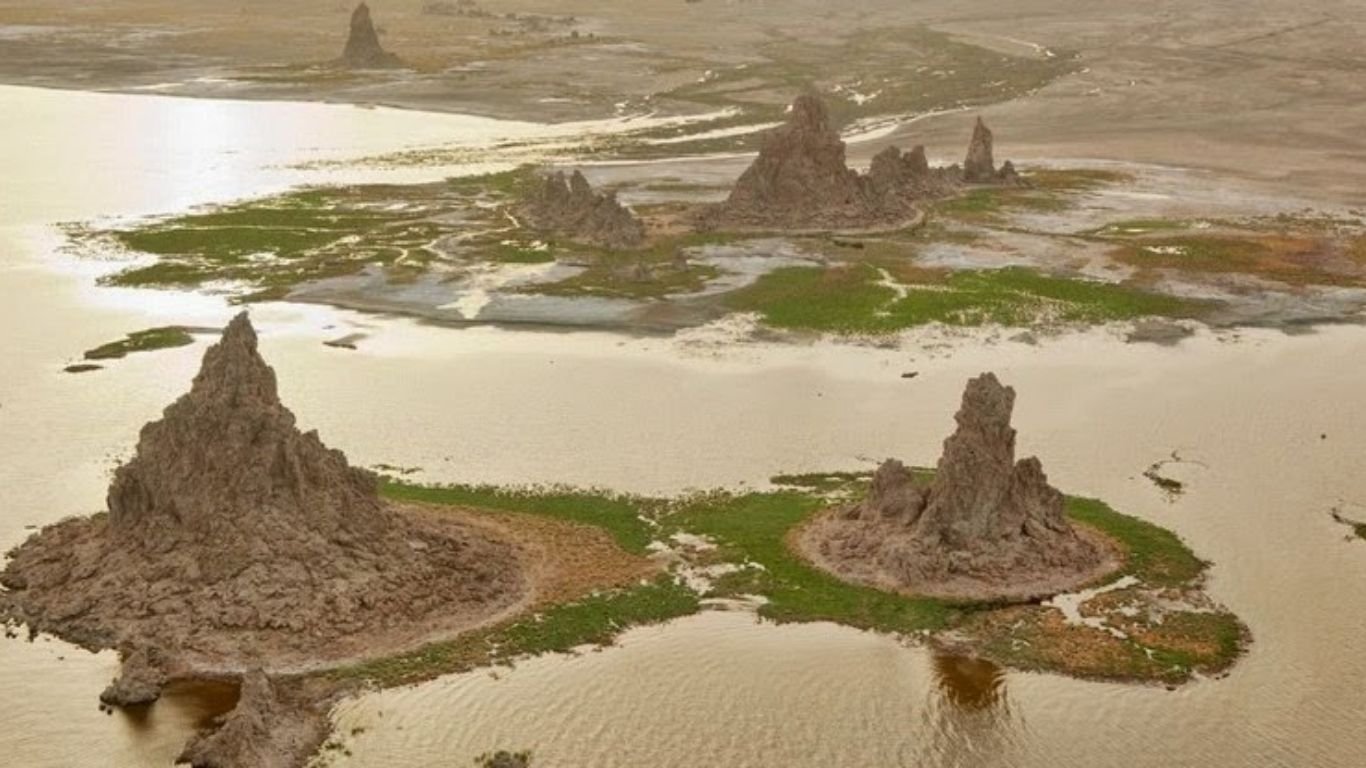
That restless geology is what makes Djibouti so unlike anywhere else on the continent. In the space of a single trip, visitors can stand at the lowest point in Africa on a lake of solid salt, snorkel beside the ocean's largest fish, hike a lush, cloud-forested mountain range, and watch the sun set over lava fields that look like the surface of another planet. Sparsely populated and still largely untouched by mass tourism, Djibouti rewards travellers who come for raw landscape and genuine adventure rather than polished resorts.
Djibouti sits at one of the most strategically important crossroads on Earth — the narrow chokepoint between the Red Sea and the Gulf of Aden, through which a significant share of the world's shipping traffic passes daily. It is bordered by Eritrea to the north, Ethiopia to the west and south, and Somalia to the southeast, with a coastline along both the Red Sea and Gulf of Aden.
Covering just 23,200 square kilometres — smaller than the U.S. state of New Jersey — Djibouti packs a startling amount of geological diversity into a small footprint: black volcanic plateaus, jagged mountain ranges, arid coastal plains, and shimmering saline lakes sitting below sea level. Few countries this small offer this much geographic contrast.
Founded in 1888 during the era of French Somaliland, Djibouti City remains the country's political, economic, and cultural centre — home to the majority of the national population. It's a city of contrasts: colonial-era architecture beside modern glass towers, container ships queuing offshore for one of the busiest ports in East Africa, and a street-level culture built on spiced coffee, seafood, and a genuinely international crossroads feel, shaped by French, Somali, Afar, Yemeni, and Ethiopian influence in equal measure.
As of 2026, Djibouti's population is estimated at approximately 1.2 million people, with a notably young median age of around 26 — a country still very much shaped by its youth. The population is largely concentrated in and around the capital, with the interior remaining sparsely inhabited.
Islam is the predominant faith, practised by the vast majority of the population, with small Christian communities coexisting alongside it. Culturally, Djibouti is shaped primarily by its two largest ethnic groups — the Somali and Afar — whose languages, music, poetry, and pastoral traditions run through nearly every part of daily life, from the rhythms of local music to the preparation of food and the structure of extended family life.
Djibouti's climate is among the hottest and driest in Africa, shaped heavily by its low elevation and proximity to the Red Sea.
Winter (December – February): Mild and genuinely pleasant, rarely dropping below 20°C (68°F) — by far the most comfortable season for travel, hiking, and exploring outdoors.
Summer (June – August): Scorching, often exceeding 40°C (104°F), frequently accompanied by dry, dusty winds — a season best suited to early-morning activity and air-conditioned respite in the middle of the day.
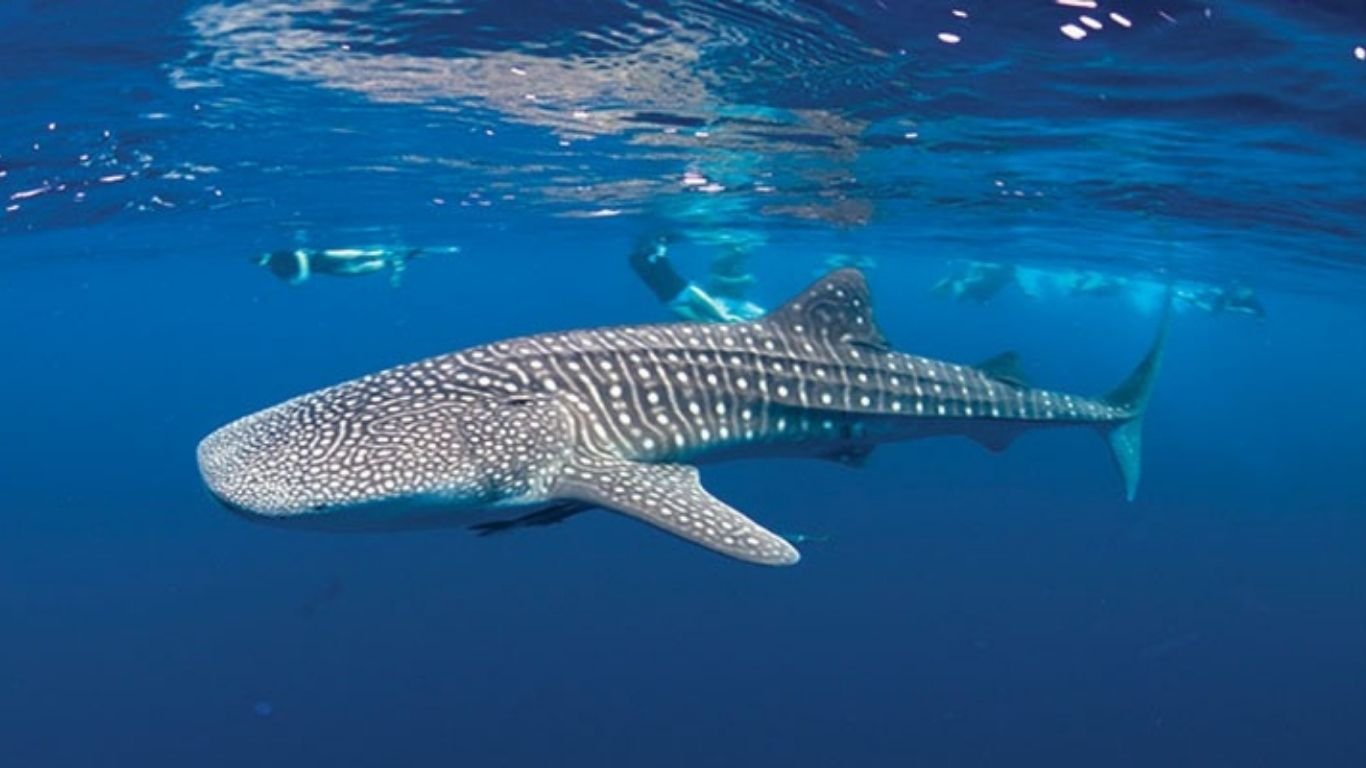
For most travellers, December to February is the ideal window. If swimming with whale sharks is the goal, plan specifically for October through February, when the migration reliably brings them into the Gulf of Tadjoura.
More than just a gateway, the capital is a destination in its own right — a genuine meeting point of Somali, Afar, French, and Arab influence. Wander the central market for spices, textiles, and fresh produce, sample a wide range of international and regional cuisine, and take in a nightlife scene that feels distinctly cosmopolitan for a city of its size.
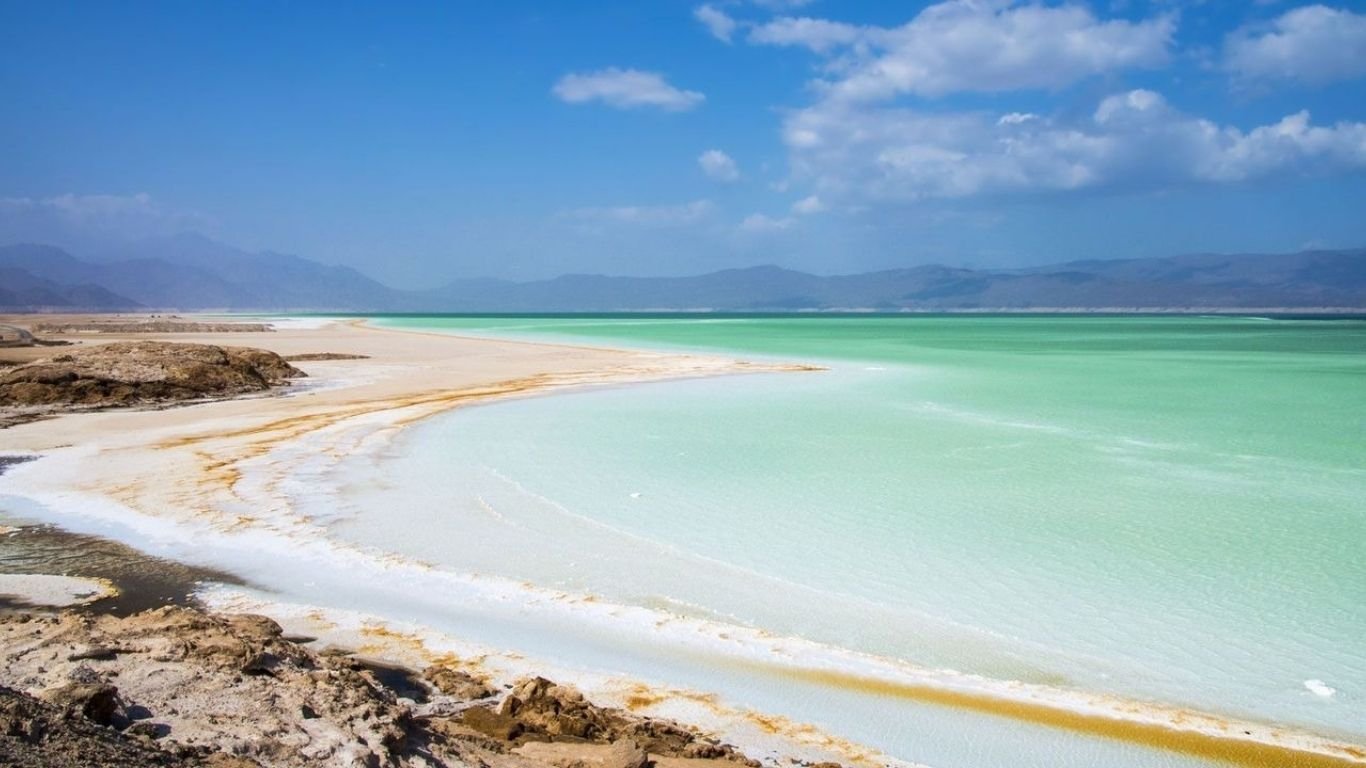
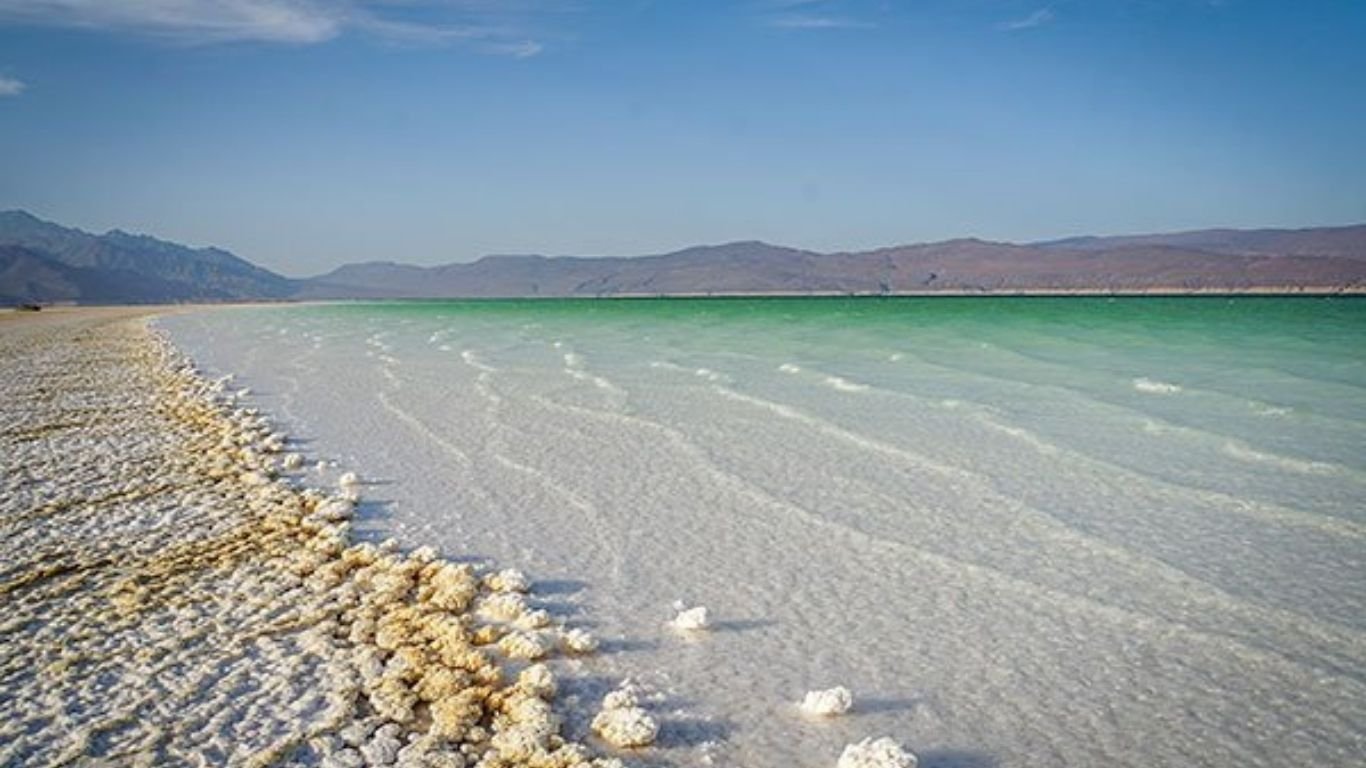
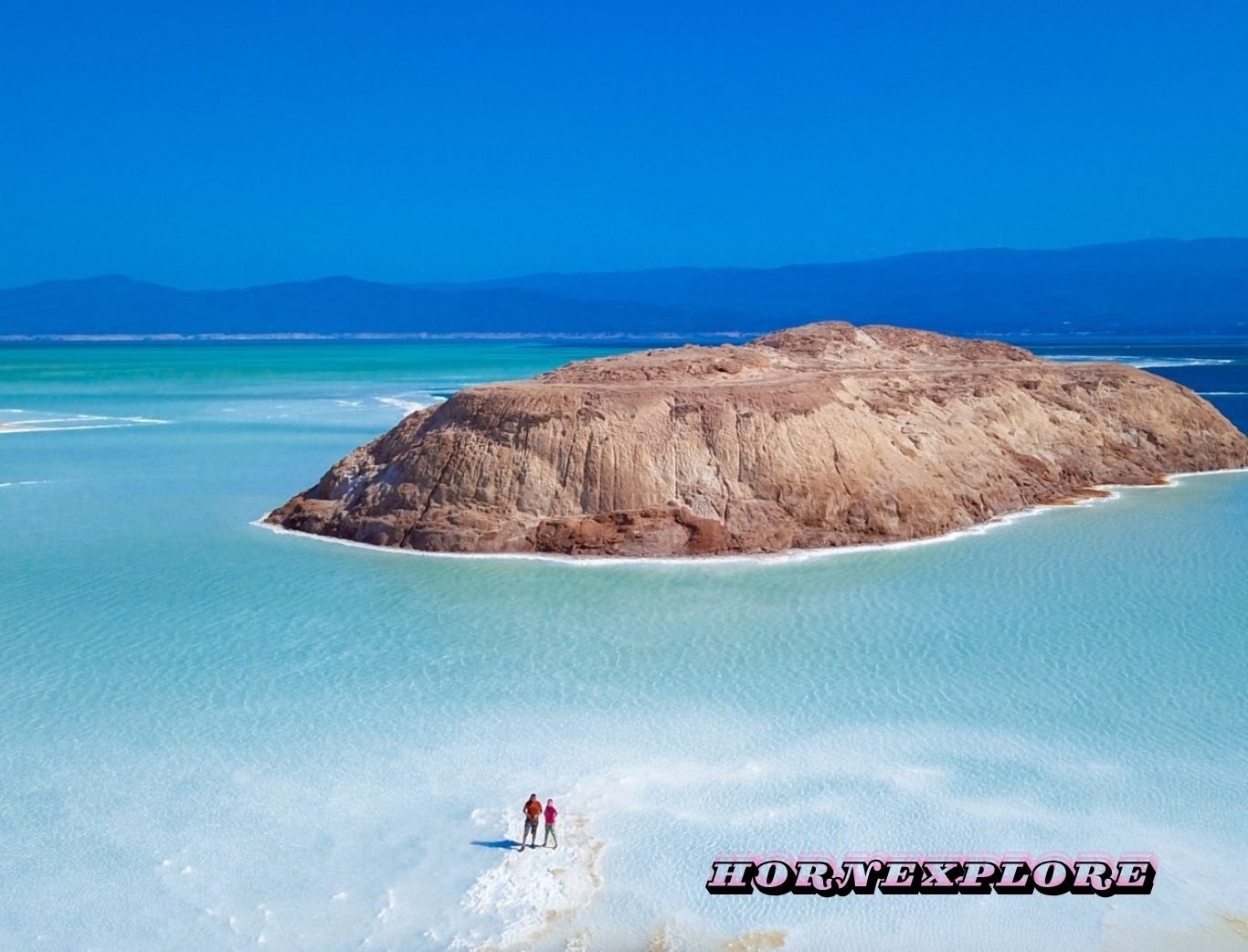
Roughly 115 kilometres west of the capital lies one of the most surreal landscapes anywhere on Earth. Lake Assal sits 155 metres below sea level — the lowest point in Africa and one of the lowest on the planet — its brilliant turquoise water rimmed by blinding white salt flats formed by extreme evaporation in one of the hottest basins on the continent. Traditional salt harvesting still takes place here today, largely unchanged for generations, giving visitors a rare glimpse of an ancient trade still in active use.
Scattered across the Gulf of Tadjoura, these two islands are Djibouti's answer to the tropical getaway — coral reefs, calm turquoise water, and some of the best snorkelling and diving conditions in the region. The real highlight, though, arrives between October and February, when whale sharks — the largest fish species on Earth — migrate into these waters, offering one of the most extraordinary wildlife encounters available anywhere in East Africa.
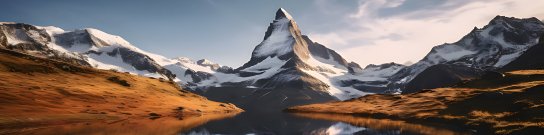
A striking contrast to the arid lowlands below, the Goda Mountains rise to 1,750 metres, hosting a rare pocket of highland cloud forest at Day Forest National Park. Here, cooler air, dense vegetation, and traditional Afar villages offer a completely different side of Djibouti — excellent for hiking, birdwatching, and wildlife photography away from the heat of the coast.
By Air: Djibouti–Ambouli International Airport sits just 6 kilometres from the city centre, with connections via Ethiopian Airlines, Turkish Airlines, and Kenya Airways, among others.
By Land: Rail connections from Addis Ababa and Dire Dawa in Ethiopia offer an alternative overland route into the country.
Visa: Djibouti has moved to a largely digital entry system. Most travellers now apply in advance through the official eVisa portal (evisa.gouv.dj), valid specifically for arrivals at Ambouli International Airport — entry by land or sea generally still requires a visa obtained through a Djiboutian embassy in advance. Typical tourist eVisas allow stays of up to 90 days, with standard processing around 72 hours, so applying at least 10–14 days before travel is strongly advised. Passports should be valid for at least six months beyond the entry date, with at least one blank page for the entry stamp.
The official currency is the Djiboutian Franc (DJF), which has been fixed to the US Dollar since 1949 at a rate of approximately 1 USD ≈ 177.7 DJF — one of the more stable currency arrangements in the region, and a rare point of predictability for budgeting a trip. The economy runs largely on cash outside upscale hotels, so carrying Djiboutian Francs is essential for markets, local transport, and smaller towns.
Djibouti's limited healthcare infrastructure outside the capital makes preparation especially important. Recommended precautions include:
Always consult a travel health professional, local health authorities, or your national health agency (such as the CDC) before travelling, since requirements can change.
To receive our best monthly deals